
Informational Guide to Popliteal Artery Aneurysm
What is Popliteal Artery Aneurysm?
The popliteal artery lies behind the knee joint and supplies the lower leg. Sometimes, the wall of this artery becomes weak due to some existing disease, such as hypertension or diabetes. Weakened artery bulges and forms a balloon-like swelling. Such swelling that involves the popliteal artery is called a popliteal artery aneurysm.

What is its Incidence in Different Populations?
The exact incidence of popliteal artery aneurysms is unknown because of the absence of a population-based study. However, men are at a higher risk of developing PAA than women. Moreover, a patient with an abdominal artery aneurysm is at greater risk of having PAA than an average individual.
What are the Common Risk Factors of PAA?
PAA is a rare disease and occurs in an insignificant number of individuals. However, certain risk factors are responsible for the aneurysm formation in the blood vessel. Some of the important ones are listed here.
- High blood cholesterol: High cholesterol results in plaque formation inside the lumen of the artery. The artery wall weakens, and an aneurysm can develop.
- High blood pressure: Hypertensive patients are more likely to develop aneurysms due to repetitive wear and tear of the vessel wall due to high blood pressure.
- Smoking: is a potential factor that destroys blood vessels all over the body.
- Existing Aneurysm: Patients with aortic and other peripheral artery aneurysms are at higher risk.
What are its Associated Symptoms?
In most cases, patients are symptomless, and an aneurysm is not noticeable. However, some may present with symptoms. The main symptom is claudication. For example, pain in the leg on walking is known as claudication. It is a cramping pain that occurs due to ischemia of the tissues. The pain resolves on resting as blood flow re-establishes in the tissue in most cases.
Here are some other significant symptoms of popliteal artery aneurysm that you should know.
- Leg pain
- Pain during the movements of the knee joint
- Visible pulsating mass behind the knee joint
What Complications can occur in Patients with PAA?
Two of the most common complications of PAA involve thrombosis and rupture. In contrast to abdominal aortic aneurysms (AAA), popliteal aneurysms are at a higher risk of thrombosis than rupture. Thrombosis happens when fatty plaque and blood clots block the popliteal artery. As a result, such patients present with ischemic signs on the leg, such as the absence of pulse, change in colour, numbness, and paralysis. Rupture of the popliteal artery aneurysm occurs only rarely.
How to Prevent Artery Disease that can Lead to Aneurysm Formation?
One who controls risk factors for arterial disease is less likely to develop an aneurysm. Some of the important approaches that you can adopt as lifestyle modifications include,
- Quit smoking if you are a smoker
- Maintain normal blood pressure and blood sugar levels
- Try to eat healthy food
- Exercise daily
What Investigations are Important for Diagnosis?
It is challenging to diagnose PAA only based on medical history and physical examination.
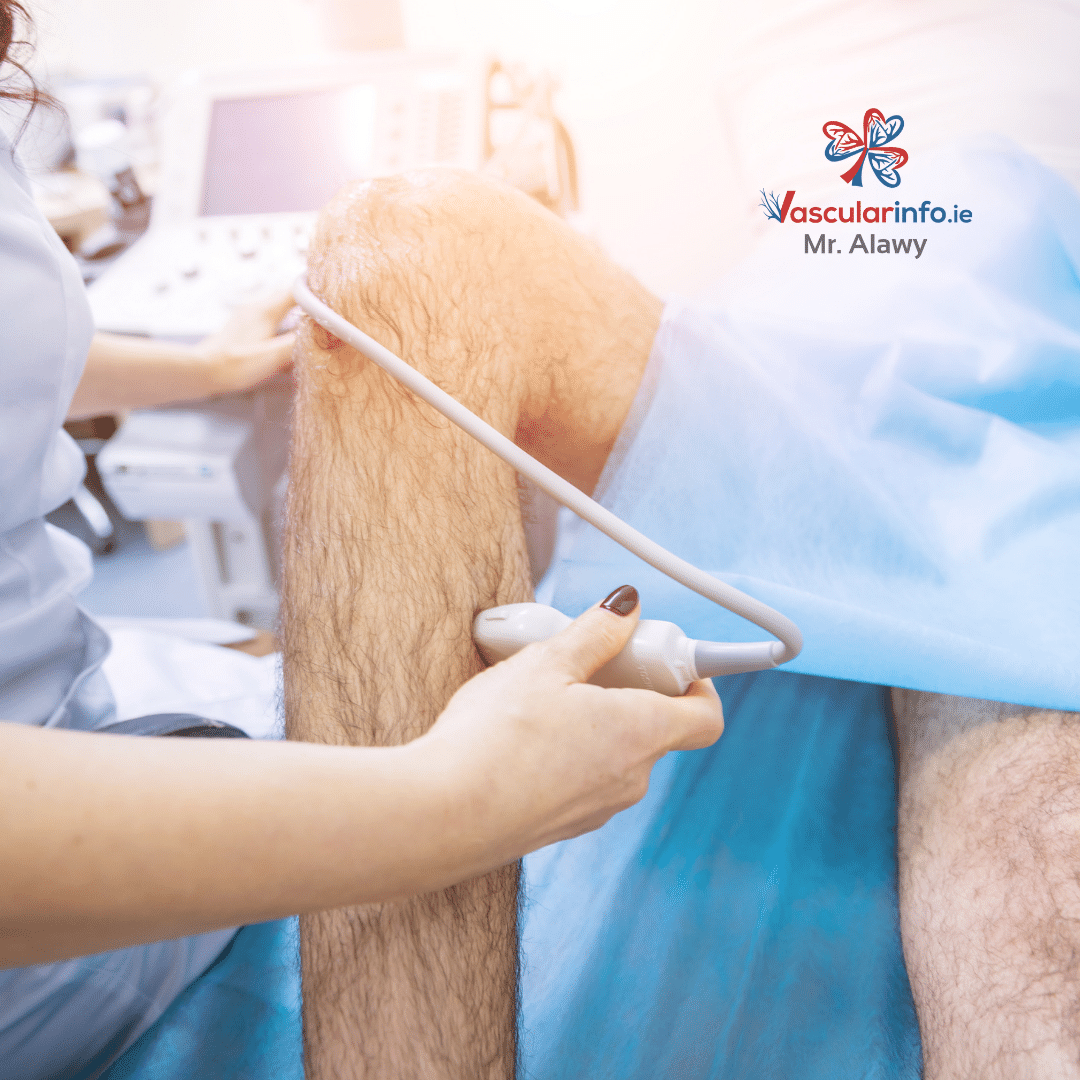
Duplex Ultrasonography: Your vascular surgeon will order the recommended investigation if he believes you might have an aneurysm. Duplex ultrasound reveals the affected vessel and the extent of the disease. Other studies, such as CT scans and magnetic resonance angiography (MRA) are also important before planning surgical treatment.
What Does the Management Involve?
Management of the patient of popliteal artery aneurysm depends upon the severity of the disease. Asymptomatic patients with a small aneurysm less than 2 cm in diameter with no blood clots inside the aneurysm do not need intervention. Therefore, they can be effectively managed using a conservative approach and follow-up.
Asymptomatic patients with aneurysms larger than 2 cm are at risk of limb-threatening complications. Therefore, elective surgery to prevent these complications is recommended management approach. Moreover, surgical repair is usually required for symptomatic patients.

What are the Surgical Treatment Options of PAA?
Popliteal artery aneurysms can be treated using two different surgical techniques.
- Open repair: It is the stander treatment for this disease. It involves ligation of the artery above and below the aneurysm. Afterwards, your surgeon will use one of your veins as a graft to bypass the aneurysm. The graft will re-establish the blood in the leg and helps to reduce symptoms.
Endovascular repair: This less-invasive approach doesn’t require open surgery to repair the defective vessel. In this procedure, your vascular surgeon will place a stent graft inside the aneurysm.
Depending on your symptom, fitness for intervention and circulation to the foot. Your vascular surgeon will go through all your treatment options, surgical risks, and risk without intervention.


