
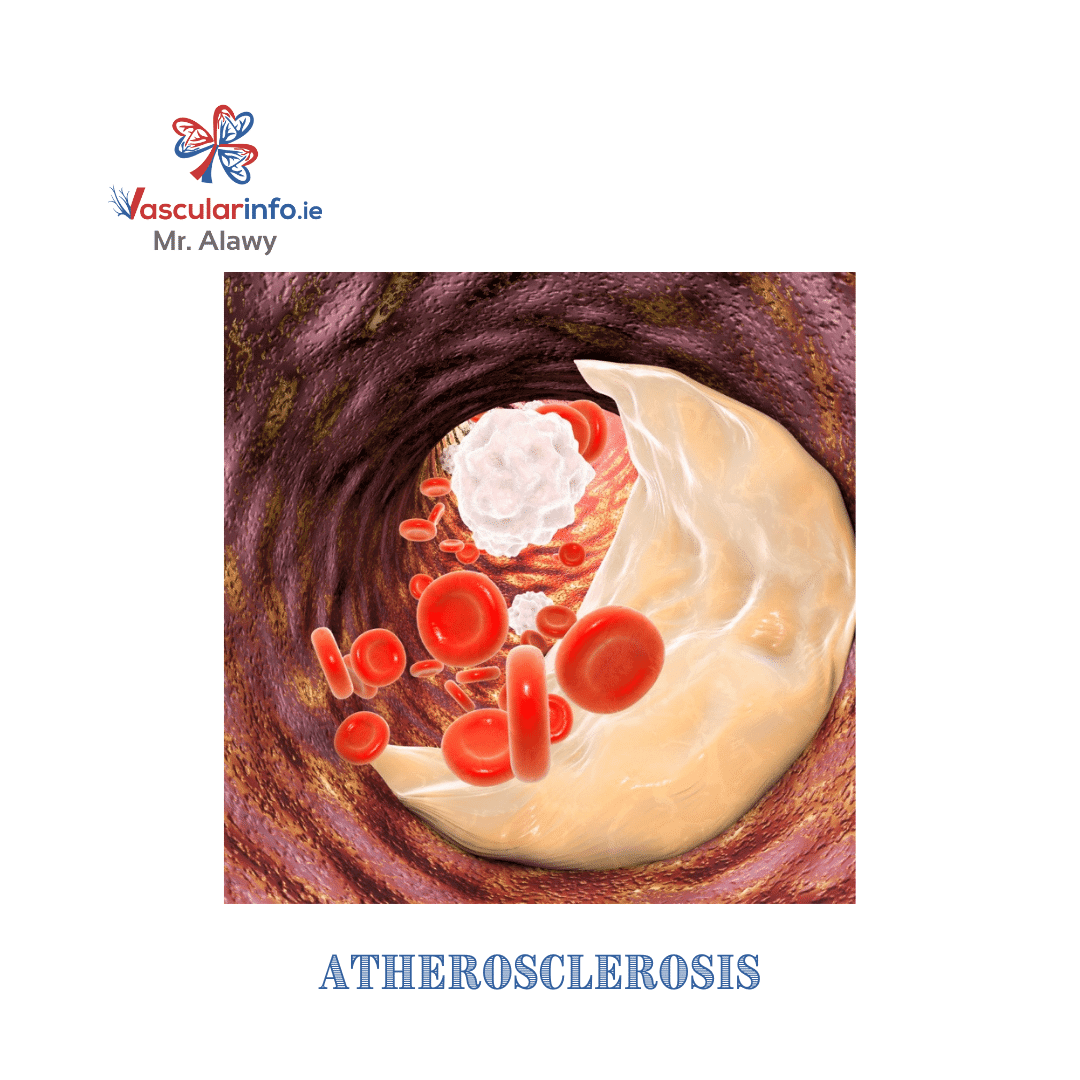
What is atherosclerosis?
Atherosclerosis develops when your arteries become clogged with fatty deposits (plaque), causing them to lose elasticity, ultimately resulting in a narrow lumen. The blood clots result from the gradual build-up of cholesterol, calcium, fat and other substances in your blood. Atherosclerosis is commonly associated with the heart. But it can affect arteries elsewhere in your body, reducing blood flow to vital organs and putting your health at risk.
What are the causes & risk factors involved in causing atherosclerosis?
Atherosclerosis is the hardening of the arteries over time. The exact cause of atherosclerosis isn’t known. Experts, however, relate atherosclerosis to certain factors that damage the arteries’ inner layers. Aside from age, the following variables may raise your risk of atherosclerosis:
- Blood pressure that is too high
- High cholesterol and LDL (a type of fat) in the blood
- Smoking and other tobacco use
- Diabetes
- Being overweight
- A family history of heart disease at a young age
- Lack of physical activity
- Unhealthy eating habits


How Does Hardened and Blocked Artery Develop Over Time?
Stage 1: When there is a malfunction of your arterial wall’s inner layer (endothelium). The following are the most dominant triggers:
- You have a lot of bad cholesterol, known as LDL cholesterol
- Toxins, for example, in cigarette smoke
- High blood pressure
Stage 2: A streak of fat
Your macrophages will become foamy (foam cells) when they load up with cholesterol. After eating the cholesterol, the foam cells will die. A swelling forms beneath your endothelium due to all the dead foam cells. Plaque formation starts on this “fatty streak.”
Stage 3: Plaque development At the location of the fatty stripe, more dead foam cells, calcium and other debris continue to accumulate. As a result, the fatty streak becomes more extensive over time, eventually becoming a larger plaque piece. At this stage, smooth muscle cells in your artery wall form a fibrous cap that coats the plaque and separates it from your bloodstream.
Stage 4: Plaque Rupture When the plaque gets more prominent fibrous cap bursts apart, causing the plaque ruptures and come into touch with your blood. A blood clot may develop because of this. This blood clot (also known as a “thrombus”) restricts blood flow or migrates to block a smaller artery.
What are the symptoms of atherosclerosis?
Mild atherosclerosis usually doesn’t present with symptoms. Atherosclerosis symptoms typically don’t appear until an artery has constricted or blocked to the point where it can’t flow enough blood to your tissues and organs. Depending on which arteries are compromised:
- You may have chest discomfort or pain in exertion if you have atherosclerosis in your heart arteries (angina).
- You may have abrupt numbness or muscle weakness in your arms or legs, temporary vision loss, difficulty speaking, or drooping muscles in your face if you have atherosclerosis in your brain’s arteries. These symptoms represent a medical emergency known as a transient ischemic attack (TIA), which may lead to a stroke if left untreated.
- You may present with peripheral artery disease if you have atherosclerosis in the arteries of your legs. PAD patients complain of leg discomfort while walking (claudication).
- High blood pressure or renal failure may result from atherosclerosis in the arteries leading to the kidneys.
- If you lose weight and have pain after eating may indicate atherosclerosis of the arteries supplying your bowel.
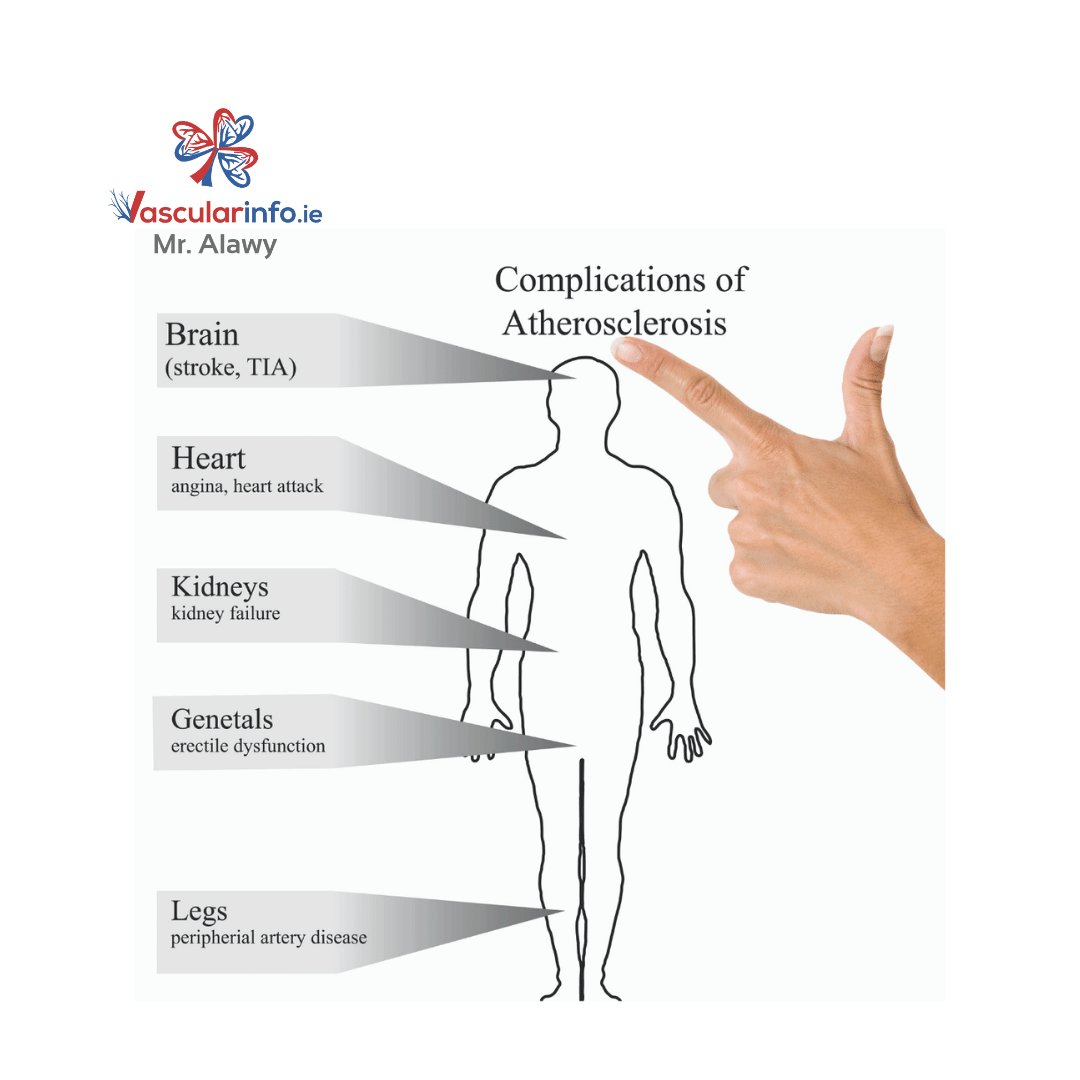
What are the acute complications of atherosclerosis?
Symptoms progress and deteriorate most of the time. Still, you may have sudden complications due to a blood clot that totally blocks the blood flow or even break apart and migrate to block smaller blood vessels. Depending on which arteries are compromised:

Rupture Aneurysm
Rupture Aneurysm is a significant consequence of atherosclerosis that may arise anywhere in the body. An aneurysm is a weakness in the artery's wall leading to expansion that usually develops gradually over time. Most persons who develop aneurysms have no symptoms. However, they may complain of sudden pain if an aneurysm rupture. It is a surgical emergency that requires urgent intervention to save your life.
A heart attack
A heart attack is a situation that affects the heart's arteries, leading to damage to your heart muscle. Coronary artery disease may cause gradual symptoms like chest discomfort (angina) or sudden symptoms such as a heart attack.
Stroke
Stroke can happen due to significant atherosclerosis to the carotid artery supplying your brain, resulting in a cut-off blood supply to part of the brain.
Foot Gangrene
Peripheral artery disease (PAD) is a condition that affects the arteries when atherosclerosis constricts the arteries in your legs. As a result, you may develop gradual difficulties in walking or may deteriorate to tissue death in the foot (gangrene).

How Is Atherosclerosis Diagnosed?
Depending on your symptoms, medical history and physical exam, your GP may order a blood test or screening tests to diagnose atherosclerosis.
The following are some of the tests to aid in the diagnosis of atherosclerosis:
Blood Test:
To detect if you have diabetes or prediabetes or to check your blood cholesterol and triglyceride levels
Cardiac Exams and Tests:
Depending on your risk and symptoms, any of the following tests may be used, an electrocardiogram (ECG/EKG), Ultrasound of your heart ECHO, exercise stress test, angiography or heart MRI
Vascular screening:
Unfortunately, vascular diseases are frequently asymptomatic. Therefore, most symptoms do not appear early and can present suddenly with a potentially life-threatening complication like a ruptured aortic aneurysm or stroke.
(A simple test that could make a difference in your life)
Carotid Ultrasound:
This scan can detect the presence of fatty deposits that can obstruct blood flow in the neck’s carotid artery. These obstructions have the potential to contribute to a stroke.
Aortic Ultrasound:
Using the ultrasound to assess the presence of an aneurysm, a weak spot in the arterial wall that balloons over time. An aneurysm can grow bigger and eventually burst, resulting in a medical emergency.
Ankle-brachial index:
A test to check for peripheral arterial disease (PAD), which can be dangerous to your leg health and is often a sign of heart disease.
How can you avoid or minimize atherosclerosis?
You may not prevent atherosclerosis. However, you can lower your risk and mitigate the disease’s effects. Several steps you can take include the following:
- Maintain a healthy diet rich in nutrients such as whole grains, fruits, and vegetables with low saturated fat, cholesterol, and sugar content.
- Stop smoking
- Regular exercise is essential.
- Keep a healthy weight.
- Regularly check your blood pressure and keep it at a healthy level.
- Control any chronic conditions you may be suffering from, such as diabetes.
- Consult your doctor to get advice for medications to reduce your risks, such as medication for high blood pressure, high cholesterol or blood thinners.


How is atherosclerosis treated?
Atherosclerosis can be life-threatening, but there is treatment available.
Early treatment can decrease the risk of serious complications and avoid surgical intervention.
Changes in lifestyle
You can check certain atherosclerosis risk factors such as smoking, elevated cholesterol, blood sugar (glucose), poor dietary habits, and hypertension.
Medications
Medications can help prevent the progression of atherosclerosis. Your GP will prescribe the appropriate medications for you:
- Cholesterol-lowering drugs such as statins
- Medication to control your blood pressure
- Blood-thinning medications can help prevent blood clots
- Medication used to treat chronic illnesses like diabetes
Procedures or Surgery
Angioplasty/Stenting:
Your doctor inserts a tiny fibre into your artery to reach the damaged area. A balloon or stent helps open the blocked artery segment.
Fibrinolytic therapy:
Therapy used to dissolve a blood clot that has become lodged in an artery
Atherectomy:
A procedure that uses a catheter to remove the blocked piece of the artery.
Bypass surgery:
Your surgeon uses a healthy blood vessel, usually your leg vein or synthetic tube, to divert blood around a blocked artery segment
Endarterectomy:
Your vascular surgeon opens your artery and removes the plaque to restore blood flow. It is usually used for the carotid artery in your neck to decrease your stroke risk.


