Patient's Guide to Thoracic Outlet Syndrome (TOS)
- Thoracic outlet syndrome (TOS) affects almost 1% of the population. It involves various symptoms; pain and numbness in the neck and the fingers are the most common characteristic features of TOS.
What is Thoracic Outlet Syndrome?
To understand TOS, you must first understand the thoracic outlet. It is a narrow space between the clavicle (collar bone) and the first rib, present at the lower neck and upper chest junction. It harbours numerous blood vessels and nerves crossing from the neck to the arm.
Any condition that squeezes this narrow space leads to a group of symptoms collectively called thoracic outlet syndrome. As evident from this passageway’s contents, pain and numbness in the neck and the fingers are the most common characteristic features of TOS.


What are the Common Causes of TOS?
In most cases, the cause remains unclear. One thing, however, that remains common is the compression or irritation of the structures present in the thoracic outlet.
- Traumatic Injury: Any physical trauma such as a roadside accident resulting in a fracture of the rib or clavicle can narrow the thoracic outlet passageway. It will then compress the contents of the outlet leading to the development of TOS.
- Repetitive Trauma due to Sports: Sports like tennis and swimming requires redundant arms and shoulder movements. Repetitive stress can lead to irritation of the nerves and vessels present in the thoracic outlet. Moreover, weight lifting is also a potential cause of TOS.
- Swelling in the Thoracic Outlet: The presence of a tumour or any lymph node swelling in the lower neck and upper chest region can lead to TOS.
- Congenital Defects: 0.2 to 0.5% of the population has extra ribs by birth. In most cases, the extra rib is at the root of the neck. The presence of the additional rib results in a narrowed thoracic outlet, and the outcome is similar to other conditions.
- Due to unknown reasons, TOS is more common in females than males. Moreover, most TOS cases lie in the age group of the 20s to 50s.
What are the possible symptoms of TOS?
Thoracic outlet syndrome has three main types depending upon the compressed or irritated structure. In addition, it can be of neurogenic, venous, or arterial type. The signs and symptoms, thus, depend on the particular kind of TOS that is present in a specific individual.


Neurogenic Thoracic Outlet Syndrome
It occurs due to the compression of the network of nerves that passes through the thoracic outlet. This particular group of nerves controls muscle movements and sensations of the skin of the shoulder and your upper limb.
Neurogenic thoracic outlet syndrome involves symptoms of numbness and tingling in the shoulder, arm, and hand. Moreover, muscle power reduces in such patients, and they often complain of a weakening hand grip.
Venous Thoracic Outlet Syndrome
Patients present with the venous form of thoracic outlet syndrome whenever an abnormality compresses the veins below the clavicle. The symptoms of this type can easily be comprehended by understanding the normal functions of veins.
Veins carry the blood from different body parts to the heart. If they get compressed, the pooling of blood occurs in that area. That’s what happens in the arms and hands in venous TOS.
Patients present with swelling and bluish discolouration of the arm. There can also be a pain in the affected region. Moreover, the pooling of blood favours the formation of blood clots.
Arterial Thoracic Outlet Syndrome
Arterial thoracic outlet syndrome is due to the compression of arteries in the thoracic outlet. It is the least common type. Due to arterial compression, there is an insufficient blood supply to the arm and hand. Thus, the patient mainly presents with pain and a weak pulse in the affected region. Furthermore, compression of the artery in TOS can cause an aneurysm in the root of the neck. Aneurysm increases the likelihood of blood clots, which can travel to smaller vessels and completely block the circulation to your hand, causing sudden pain and discolouration.


How to Diagnose a Case of TOS?
Diagnosis of a disease is significant in devising treatment and management protocols. First, your GP would ask you about your medical history. It involves all the symptoms that you are experiencing. In addition, he will also ask you about your occupation or any physical activity that may increase the likelihood of the development of thoracic outlet syndrome. The next step in developing a diagnosis of a disease is physical examination. Doctors usually examine your lower neck region to look for depression or swelling. They also determine whether your arm or hand has good sensory and motor control. The last step of constructing a medical diagnosis is investigation. Two of the most critical tests for TOS diagnosis are X-ray chest and ultrasound. Ultrasound will help your vascular surgeon in diagnosing vascular TOS. At the same time, an X-ray chest helps to look for the presence of an additional rib. Additional tests that your surgeon may order for the confirmation of diagnosis:
- CT scan
- MRI
- Nerve Conduction Study
- Venography
What are non-surgical treatment options?
Not all patients will need surgical intervention. Several non-surgical treatment options are available for such patients depending on the type of thoracic outlet syndrome.
The primary step in the treatment of neurogenic TOS is physical therapy. Physical therapy involves various movements of arms and shoulders to improve your posture, as bad posture can be a risk factor for TOS development.
In addition to physical therapy, your doctor will prescribe you pain-relieving medications. He may also give you muscle-relaxing drugs to relax the muscles of your neck and shoulder. However, these medications only provide you temporary relief. In the case of vascular TOS, your doctor may prescribe you blood-thinning medications to reduce the risk of clot formation. In addition, you may need further intervention to improve your symptoms.


When do you Need Surgery for Thoracic Outlet Syndrome?
Doctors usually recommend surgery for the treatment of TOS under three conditions,
Neurological TOS
- When your symptoms are not improving with conservative methods
- When your symptoms worsen with time
- When you start experiencing symptoms that are hindering your daily life activities
Venous TOS
- You need surgery when a clot in the veins is not responding to medical treatment, with arm swelling or pain hindering your daily life activities.
Arterial TOS
- Your surgeon would advise surgery when the circulation to your hand is compromised or if you have an aneurysm in your neck.
How is TOS surgery going to help with your symptoms?
The operative treatment of thoracic outlet syndrome is decompression surgery. As the name indicates, it involves reducing the pressure in the thoracic outlet. The surgeon will operate on the muscle compressing or irritating nerves or vessels in this procedure. Furthermore, Suppose you have a cervical rib or your first rib causing the compression. In that case, your surgeon will remove it during this procedure to help relieve nerve and blood vessel compression by creating more room for them to pass under the collar bone.
In addition to decompression surgery, venous and arterial TOS will require:
In Venous TO
-Doctors prescribe blood thinners first to treat the clots
-Thrombolysis: A technique to dissolve a clot in a vein commonly performed before TOS surgery.
-A venogram is a keyhole intervention that can be used after TOS surgery to assess the vein for any remaining damage. Then, the vein is usually expanded via a balloon (angioplasty).
In arterial thoracic outlet syndrome:
The surgeon also removes the affected portion of the artery. An arterial graft then replaces this piece (Bypass Surgery) to restore the circulation to your arm.


What are the Complications of Surgical treatments?
One of the major concerns of the patients is the recurrence of the symptoms even after surgical intervention. 1st rib resection surgery is an efficient surgical approach, and most patients get treated after this procedure. However, there are chances that a few patients may not even respond to the surgical technique. Significant complications are rare and occur in only 2 to 3% of the operated patients, such as bleeding from arteries and veins in the root of the neck or a leak of lymph fluid from the neck. Moreover, nerve damage can also occur, leading to transient or permanent paralysis of the affected area. Finally, damage to the lungs during the surgery can lead to a life-threatening condition of pneumothorax.
What are the Rehabilitation Options after Surgery?
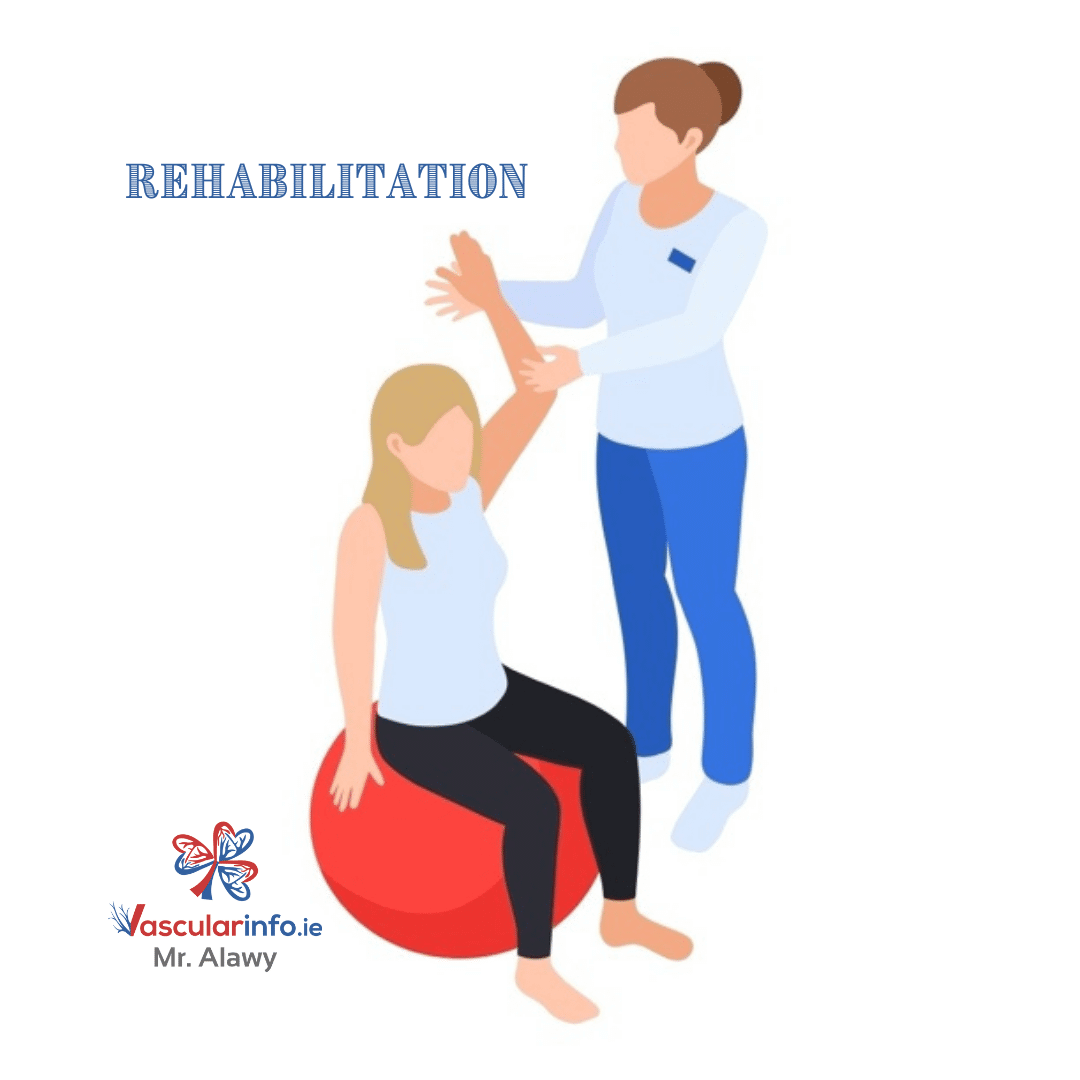
Even though surgery has reduced the compressive factor of TOS, rehabilitation is required to regain or recover the function of nerves and blood vessels. Early on after surgery, your physical therapist will guide you about low range motion exercises of the neck and shoulder. The therapist will also teach you the perfect sleeping position for good rehabilitation. After a month of surgery, you would start stretching exercises to recover the lost muscle functions. Complete range movements and strengthening activities are discouraged up to three to four months after surgery.