

Informational Guide to Endovascular AAA Repair (EVAR)
This article is for you if your vascular surgeon has advised EVAR for the surgical repair of your aneurysm. Answers to most of your questions are present in this article.
What is an Abdominal Aortic Aneurysm?

What are the Indications for Surgical Treatment?
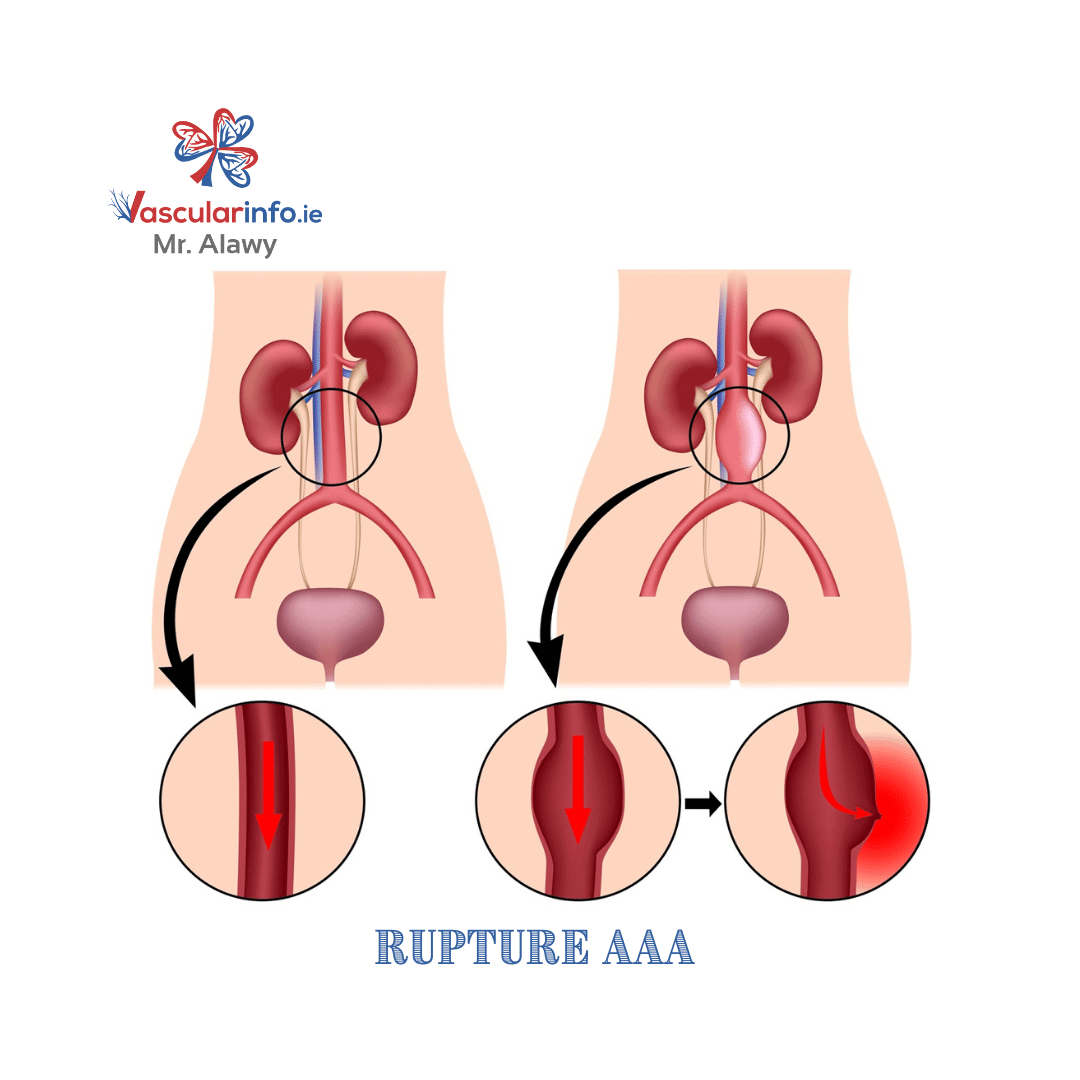
The normal abdominal aorta has a diameter of 1.4 cm to 3.0 cm. AAA is a swelling that is more than 3.0 cm in size. The size of the aneurysm is usually directly related to the risk of rupture. Aneurysmal rupture is a devastating condition as it leads to severe bleeding.
Your vascular surgeon will recommend surgical treatment under the following conditions.
- If your aneurysm is more than 5.5 cm in size
- If the aneurysm is rapidly growing
- If the aneurysm is painful and you are also showing persistent symptoms of the disease
- If you have an abnormal shape of aneurysm that has a high risk of rupture
- In an emergency, if there is a rupture of the aneurysm
What are the Options for Surgical Treatment?
- Open repair involves opening your abdominal cavity to locate the aneurysm. Next, the vascular surgeon stitches the graft into the place of the aneurysm. He finally closes the abdomen and applies stitches on the wound.
- Endovascular Repair (EVAR) is a treatment method in which your surgeon inserts a graft into the aneurysm via a vessel in your groin. It is a less invasive technique that promotes rapid healing. However, you will need multiple follow-up scans after surgery to check the stent position and the size of the treated aneurysm, usually every six months or yearly.
- Complex Endovascular Repair of AAA: Complex endovascular repair involves procedures like fenestrated repair or branched repair.


What Does the Complex Endovascular Repair of AAA Involve?

Under What Conditions Will You Need EVAR?
- If you have other diseases that may complicate the conventional method of open repair
- If you have proper anatomy of the aorta and its major vessels. You need to have a long enough section of a normal artery for the stent graft to attach securely

Are There Any Tests Required Before Surgery?
What Happens During the Surgery?

What Happens After EVAR?
When Will You Go for Follow-up?
In the case of EVAR, you need long term follow-ups than open surgical repair. The first follow-up few weeks after the surgery. Your doctor will examine your wound to look for any signs of infection. He will also assess your overall health to look for signs of postoperative complications during this visit.


What are its Possible Complications?
- Endoleaks: Sometimes, blood leaking occurs from the graft. The blood gets pooled up in the aneurysm sac and causes it to swell again. In most cases, leaks are not significant but sometimes require reintervention for proper control.
- Vessel problems: Bleeding from the groin or injury to one of the main arteries in your abdomen. This risk is low, usually about 1% of the patients.
- Kidney Problems: In EVAR, your doctor uses a dye to make your vessels visible to the X-ray machine. After the surgery, the dye gets cleared through the kidneys. People who already have kidney problems are at higher risk as the dye has the potential to damage the kidneys
- Heart disease: AAA patient usually has some underlying heart disease. Life-threatening conditions such as heart attacks may happen after the intervention.
- Chest Infections: There are chances of chest infections after the endovascular repair of the aneurysm.
- Other severe but rare complications: leg paralysis, blocked blood flow to your abdomen or lower body, graft infection, and delayed AAA rupture.
What Are Endoleaks?
What Are Different Types of Endoleaks?
- Type I: When the blood leaks from the attachment site of the graft with the vessel wall
- Type II: When there is a filling of the aneurysmal sac with blood via a branch artery
- Type II: When there is a filling of the aneurysmal sac with blood via a branch artery
- Type IV: In such cases, the graft becomes highly porous and allows the blood to leak through the graft
Your vascular surgeon will explain your treatment options and surgical risks in detail.


